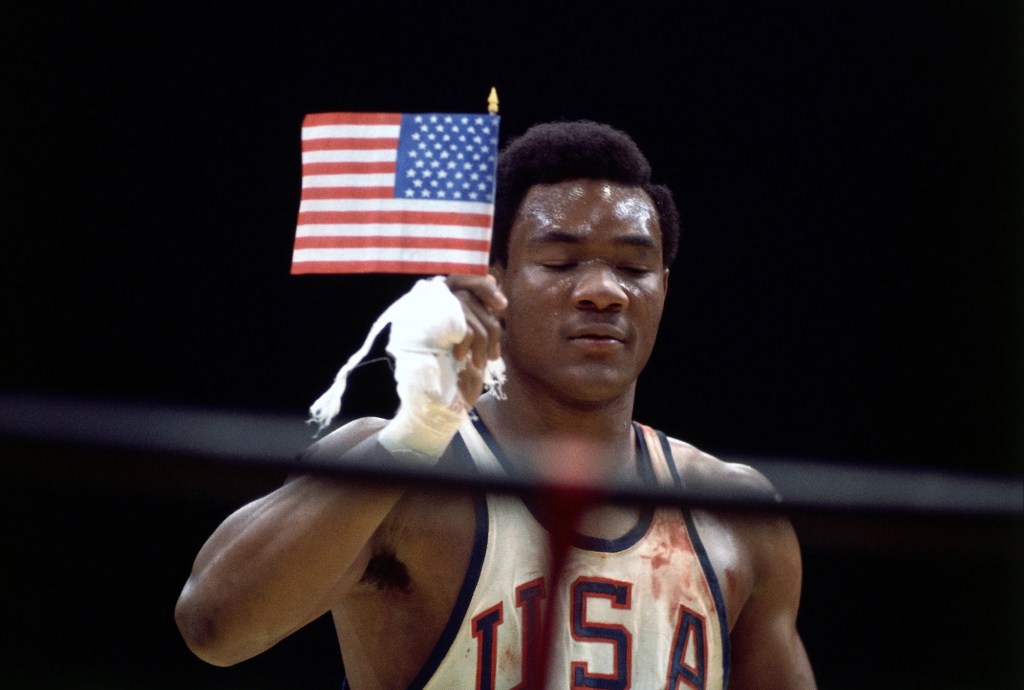
All-time boxing great and business mogul George Foreman has passed away at the age of 76.

George Foreman is a name synonymous with resilience, power, and reinvention. Born on January 10, 1949, in Marshall, Texas, Foreman rose from humble beginnings to become one of the most iconic figures in boxing history. His career—spanning decades—is a testament to his skill in the ring and his ability to adapt and thrive outside of it. From Olympic gold to heavyweight championships and later a successful entrepreneurial venture, Foreman’s journey is nothing short of remarkable.
Early Life and Olympic Glory
Foreman grew up in Houston’s Fifth Ward, a tough neighborhood where he faced poverty and adversity. As a teenager he was known for his rebellious nature, but his life took a pivotal turn when he joined the Job Corps, a federal program aimed at helping disadvantaged youth. There, he discovered boxing—a sport that would channel his raw energy and strength into something extraordinary.
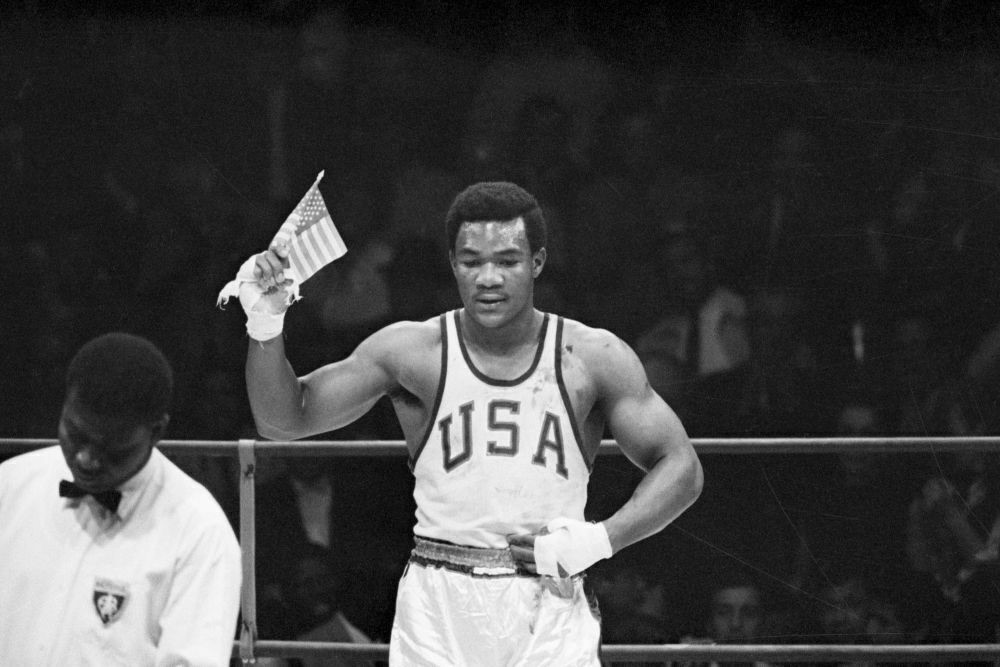
At just 19 years old Foreman burst onto the international stage at the 1968 Summer Olympics in Mexico City. Competing as an amateur, he won the gold medal in the heavyweight division, defeating Jonas Čepulis of the Soviet Union in the final. His victory was not just a personal triumph, but a moment of national pride, as he famously waved a small American flag in the ring—a gesture that stood out amid the turbulent political climate of the time.
Professional Career: The Rise of “Big George”
Turning professional in 1969, Foreman quickly established himself as a force to be reckoned with. Standing at 6’3” with an imposing physique and a devastating punching power, he earned the nickname “Big George.” His early professional record was a string of knockouts, showcasing his ability to end fights with brute force.
Foreman’s defining moment came on January 22, 1973 when he faced Joe Frazier, the reigning heavyweight champion, in Kingston, Jamaica. Frazier, known for his relentless style, was no match for Foreman’s power. In a stunning upset, Foreman knocked Frazier down six times in two rounds, claiming the heavyweight title with a second-round TKO. At 24 he was the king of the division.
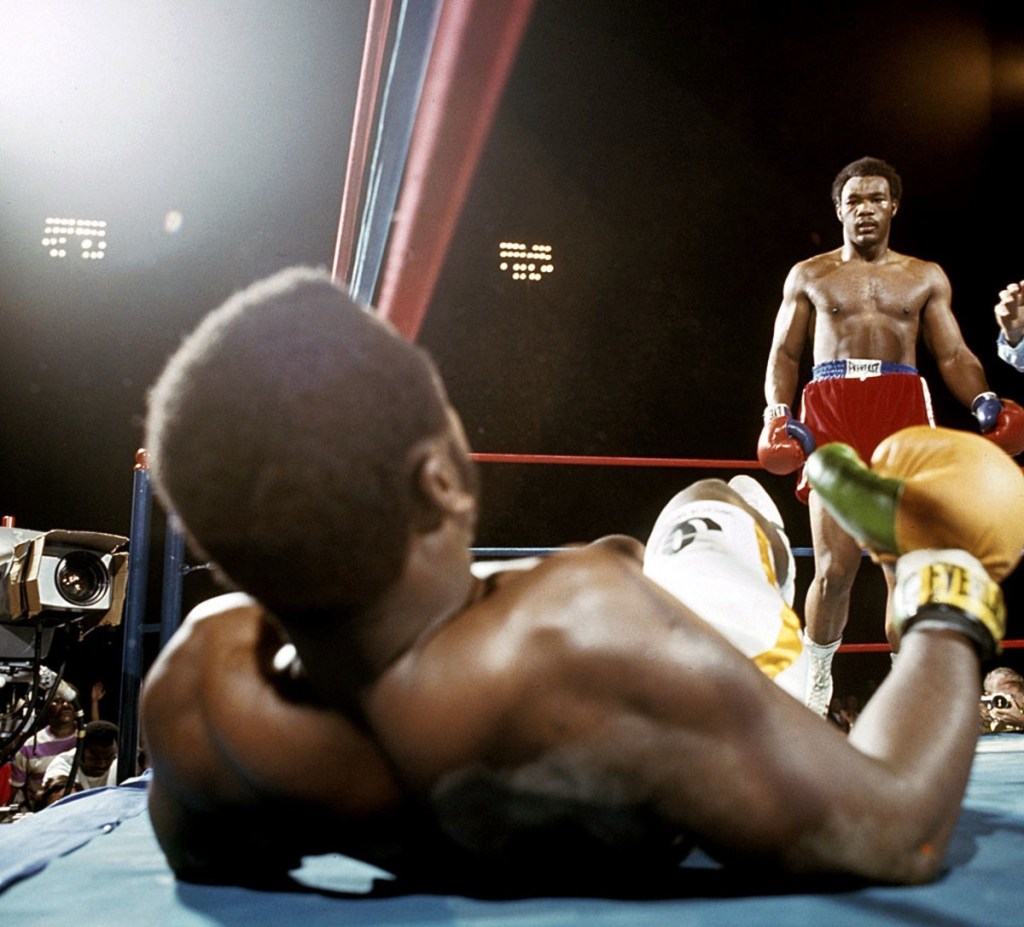
He defended his title twice, including a brutal two-round demolition of Ken Norton in 1974. By this point, Foreman was seen as invincible, with a record of 40 wins—37 by knockout—and no losses.
The Rumble in the Jungle
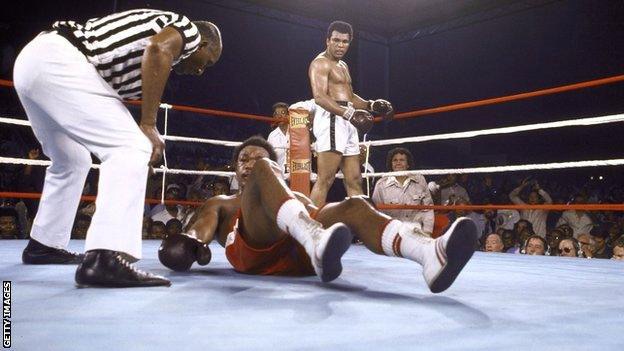
Foreman’s reign as champion came to a dramatic halt on October 30, 1974, in Kinshasa, Zaire (now the Democratic Republic of the Congo), in what is arguably the most famous boxing match in history: “The Rumble in the Jungle.” Facing Muhammad Ali, a former champion seeking to reclaim his title, Foreman entered as the overwhelming favorite. Ali, however, employed his now-legendary “rope-a-dope” strategy, absorbing Foreman’s punishing blows while leaning on the ropes to tire him out.
In the eighth round, with Foreman exhausted, Ali struck back, knocking him out with a combination that shocked the world. The loss was a bitter pill for Foreman, marking his first professional defeat and stripping him of the heavyweight crown. It also began a period of soul-searching for the young fighter.
Retirement and Return
After the Ali fight, Foreman continued boxing but struggled to recapture his former dominance. In 1977 after a loss to Jimmy Young, he experienced a religious awakening in his dressing room, claiming to have had a near-death experience and a vision of God. At 28 he retired from boxing to become a born-again Christian, and later an ordained minister, dedicating himself to his faith and community in Houston.
Remarkably, Foreman’s boxing story didn’t end there. In 1987, at age 38, he launched an improbable comeback, driven by a desire to fund his youth center and prove he could still compete. Defying skeptics, he fought his way back into contention over the next few years, relying on experience, power, and a more measured approach than in his youth.
On November 5, 1994, Foreman achieved the unthinkable. Facing Michael Moorer, the reigning heavyweight champion, in Las Vegas, the 45-year-old Foreman landed a perfectly timed right hand in the 10th round, knocking Moorer out to reclaim the heavyweight title. He became the oldest heavyweight champion in history, breaking a record that still stands. The victory cemented his legacy as one of boxing’s all-time greats.

Life Beyond the Ring
Foreman retired for good in 1997 with a professional record of 76 wins—68 by knockout—and 5 losses. But his career outside boxing proved just as impactful. In the 1990s he reinvented himself as a charismatic pitchman, most famously endorsing the George Foreman Grill—a lean, fat-reducing grilling machine. The product became a cultural phenomenon, selling over 100 million units worldwide and earning Foreman an estimated $200 million—far more than he ever made in the ring.
He also authored books, appeared on television, and remained active in philanthropy, particularly through the George Foreman Youth and Community Center in Houston. His affable personality and infectious optimism endeared him to millions, transforming him from a fearsome fighter into a beloved public figure.
Legacy
George Foreman’s career is a tale of two acts: the ferocious young champion who dominated with power, and the seasoned veteran who defied age and expectations. His journey reflects not just athletic prowess, but an ability to adapt, grow, and find purpose beyond the sport. With two heavyweight titles 20 years apart, an Olympic gold medal, and a lasting impact on popular culture, Foreman’s legacy transcends boxing.
Even though we lost one of boxing’s greats, at 76, Foreman remains a symbol of perseverance and reinvention—a man who punched his way to the top, fell, rose again, and built an empire with a smile. “Big George” is more than a boxer; he’s a legend whose story continues to inspire.
By Vincent Quezada
Photos by Associated Press, Getty Images


***Have you tried Dubby?? Are you looking for a Pre-Workout??
Our promo code : WeLikeSportz for 10% off!


 WE LIKE SPORTZ SHOW
Leave a reply to Cowboy_Regg Cancel reply