The earliest recognition of “baseball” dates back to 1786, and it is only mentioned in writing from a diary passage, by a Princeton University student to have played a game called “baste ball.” Another early reference to the game of “base ball” now spelled a little closer was in 1823, in the outskirts of New York City in a place called Greenwich Village.
In 1903, a British sportswriter Henry Chadwick wrote an article claiming that baseball was derived from an English game calledrounders which Chadwick had played as a boy in England. Baseball executive Albert Spalding disagreed, stating that the game was American and was created in the United States. “Rounders” involves hitting a small, leather ball with a wooden, plastic, or metal bat that has a rounded end. The players score by running around the four bases on the field.
We’ve all heard the terms diversity and equality, especially in recent years. Women have been playing baseball basically as long as men have; just not at the Major League level as we know it today. Women’s historic connection to the game began in the 1860s with pioneers of women’s baseball; like Amanda Clement, Jackie Mitchell, Alta Weiss, Edith Houghton, Toni Stone, Maria Pepe.
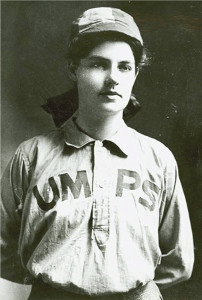
1904, Amanda Clement 16 years old, became the first female umpire. She worked 50 games and was paid $15-25 a game. Clement was very well liked and respected as an umpire, she believed it was due to the fact that men didn’t speak abusively towards women.
Alta Weiss joined a semi-pro men’s team at 17 years old. She debuted to a crowd of 1,200 fans. Special trains were arranged so that large groups of fans could attend her games.
AltaWeiss and Amanda Clement made enough money through their time in baseball to further their education. Clement went on to be a Physical Education. teacher and Weiss went on to become a doctor.
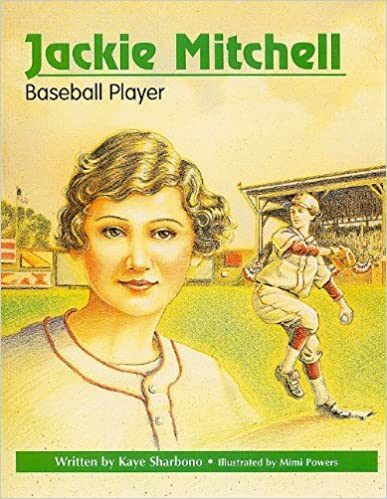
1931 – Jackie Mitchell a 16 year old girl from Chattanooga, Tennessee, Jackie’s next door neighbor was Major League pitcher Dazzy Vance of the Pittsburgh Pirates and Brooklyn Dodgers. Vance gave her advice and played catch with her on occasion. Mitchell signed a minor league contract with the men’s team the Chattanooga Lookouts. Soon after signing, Mitchell plays in an exhibition game against the NY Yankees. Jackie Mitchell pitched in this game and is believed to have struck out both Babe Ruth and Lou Gehrig consecutively, many people are skeptical of this feat, whether you believe this to be true or not, even in an exhibition game a 16 year girl pitching to the two biggest legends of that era is very impressive.
“I don’t know what’s going to happen if they begin to let women in baseball. Of course, they will never make good. Why? Because they are too delicate. It would kill them to play ball every day.“
Babe Ruth
After Mitchell struck out Ruth & Gehrig, commissioner Kenneth Mountain Landis voided her contract and said women were unfit to play baseball as it was too strenuous.
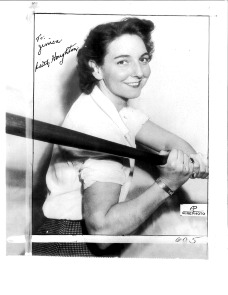
1922 – Edith “The Kid” Houghton, In 1922 Edith who was 10 years old, tried out for the semi-pro team the Philadelphia Bobbies. She quickly became a star with the fans and reporters for her excellent fielding and hitting expertise. Houghton was the youngest on the team made up of mostly teenage girls. Edith was a star athlete and baseball player.
In 1925 she travelled with her team to play in Japan to play against men. Once in Yokohama, the team attracted large crowds, especially in the beginning. Houghton impressed many Japanese reporters. The Bobbies were contracted to play 15 games for $800, their finances fell through halfway through the trip. Edith was forced to come back home, after being funded by a family in Kobe, Japan for her trip back to the States.
Now back home in the U.S., Houghton started playing female softball in the 1930s. In 1942 during World War II Edith would go on to be a part of the Navy’s baseball team. The Navy newsletter wrote that: “enlisted Houghton… can make any ball team in the country.”
After the war in 1946, Edith took her final steps and skills to a new level. Houghton got an interview from Philadelphia Phillies owner Robert Carpenter Jr., and General Manager Herb Pennock. The Phillies made national headlines, when they hired Houghton as MLB’s first female scout. A position in which she held from 1946-52.
1953-54 Toni Stone – First African American female to play at the men’s level, in the Negro League she played for the Indianapolis Clowns and Kansas City Monarchs as a second baseman.
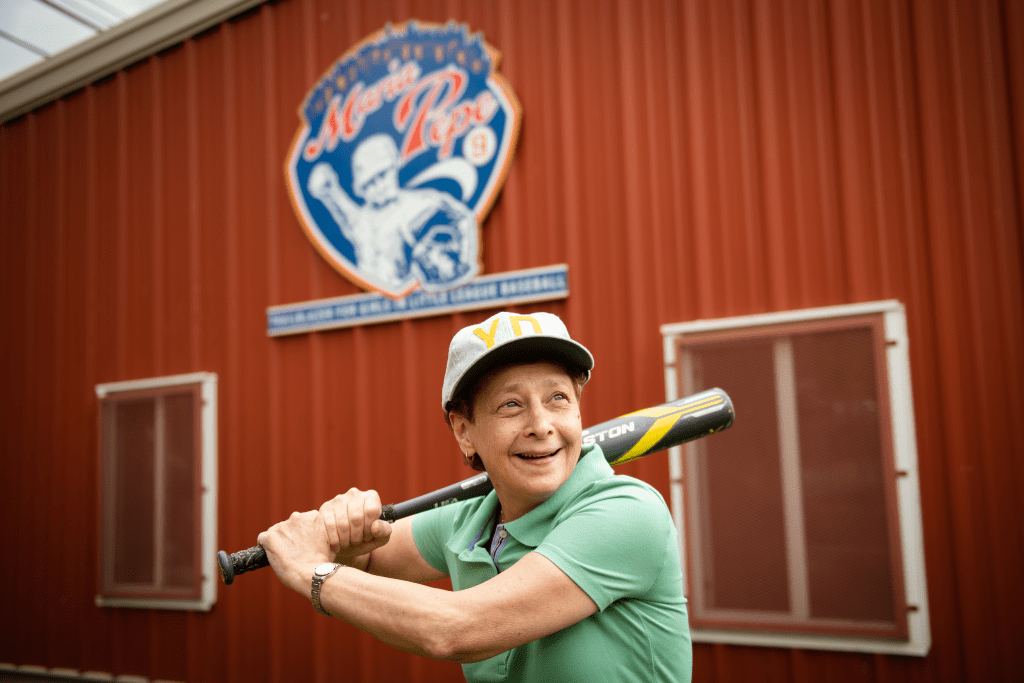
1972 –Maria Pepe, at age 12, she pitched three Little League games for the Young Democrats team out of Hoboken, New Jersey. Pepe was one of the first girls to play little league baseball. Maria Pepe was asked to leave the team after the Little League “threatened to revoke Hoboken’s charter.” A court case began on Maria’s behalf, and decided that Little League must allow girls to try out. The Little League organization began a program specifically for girls starting in 1974.
Maria Pepe helped opened the doors for girls to play baseball, even if it was just Little League.
“When somebody would ask me what I wanted to be when I grew up, I would always answer that I wanted to be a Yankee,”“I encourage the girls to believe in themselves and to never accept anyone saying you can’t do something just because you’re a girl.” -Maria Pepe
For all of her outstanding achievements in 2004 The Yankees made her an honorary “Yankee for a day.”
***Are you interested in sports betting? If so make sure to use our promo code below where you can get your deposit matched (up to $1000), use promo code Sportz***
***Have you tried Dubby?? Are you looking for a Pre-Workout?? Use our promo code : WeLikeSportz for 10% off!
[…] We’ve all heard the terms diversity and equality, especially in recent years. Women have been playing baseball basically as long as men have; just not at the Major League level as we know it today. Women’s historic connection to the game began in the 1860s with pioneers of women’s baseball; like Amanda Clement, Jackie Mitchell, Alta Weiss, Edith Houghton, Toni Stone, Maria Pepe and it continues today with these pioneers in ownership, radio and television, coaches, managers and executives. This is the second part of a three part series, you can read part 1 here. […]
[…] to complete. If you may have missed one of the other three articles, here are the links to the first article, the second article and the third article. Cheers to these women for knocking down doors and […]







 WE LIKE SPORTZ SHOW
Leave a comment