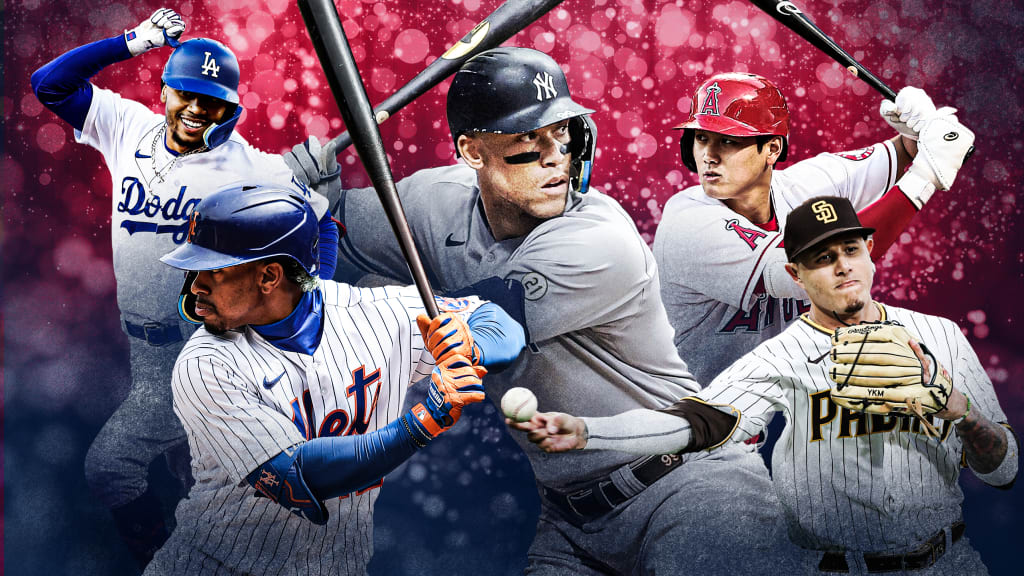
We’ve heard the refrain over and over, baseball has problems, baseball is too boring for the casual fans, baseball games take too long, blah blah blah. So, the MLB, in its infinite wisdom has decided to make some changes to the rules for the upcoming 2023 season. These include banning the shift, adding a pitch clock, eliminating the number of pickoff attempts, making the bases bigger, and permanently adding a runner on second base in extra innings. The problem is none of these rule changes are going to bring back the fans. If anything, the people, like me, who love baseball, are getting less interested every time they try to “fix” the game.
Now, let’s not pretend that baseball viewership is in a good place. In the 60s and 70s, baseball ratings were in the 20s and 30s, generally (which is really good). That dipped a little in the 90s, but ratings and viewership were generally good. Starting in in the 2010s, baseball rating have taken a nosedive. Since 2018, baseball has not had a rating above 10, and viewership is half what it was in the 90s.
So what happened? Is the modern culture just not a good fit for the game of baseball? Do the millennials and Gen Z fans want more speed and shorter games because they have lower attention spans. Is the lack of “action” in the game the problem? No. None of that. Baseball is a strategic wonderland. Statistically speaking, hitting a baseball is the hardest thing to do in any sport. When a .300 average is the mark of a good hitter, there is more to the sport than “action.”
The problem with baseball is that the strategy in the game is being ignored. The “action” is what happens before the ball is thrown. The way the runners lead off, how the pitcher positions himself with a threat on the base paths, how the pitcher feigns in order to catch the runner off guard, what pitch to throw, where the batter stands in the box, the hit and run strategy, whether to bunt, and the list goes on. Rather than trying to highlight the skill and IQ of the game, casual baseball fans and the MLB have focused on juicing baseballs, exit velocity, and launch angles. Bat flips (which I love) get more love than .300+ hitters. Baseball has lost its focus.
So, let’s take a look at each change, and how it detracts from the actual reasons people love baseball.
The Shift
MLB has banned the shift, starting this season. Now, all infielders must be on the dirt, with two players on each side of second base.
The league wide batting average in MLB is the lowest it has been since 1968 at .243. Some fans blame the shift, because “how can a hitter beat it!” Well, the shift has always been legal. Ted Williams faced a shift. Amazingly he, and other good hitters, learned to beat it. The bunt has disappeared from baseball, despite being one of the best ways to beat the shift.
The shift-banning started in some low levels of the minor leagues. Of course, batting averages went up, but barely. Why? Because the issues with batting average is NOT caused by the shift. It is caused by the league, analysts, and coaches, teaching people that home runs are king. Over the past three seasons, singles have been hit at the lowest levels in MLB history. Strikeouts are up. Walks are down. Why? Because apparently, striking out three times in a game with one home run is “sexier” than four singles, three RBIs, and two runs scored.
What does the lack of singles mean for the game? Less action! No runners on base. No stolen bases. The game within the game becomes obsolete and fans are left watching people swing for the fences and crush it (which is awesome) or strikeout. Big duels between good hitters and good pitchers used to be fun. Why? Because a pitcher facing five .300 hitters was exhilarating.
If a team violates the rule, if the batter gets a hit, play continues. If there is any other outcome, the hitting team can choose to add a ball to the hitter’s count, or let play continue. In the effort of “speeding up the game,” MLB decided that making a hitter get back in the box, add a ball to the count, and then resume play will be much more exciting than having the hitter actually have to beat the shift.
Banning the shift hasn’t worked in the minors in raising batting averages. It’s a feel-good fix for hitters who haven’t been taught that singles and getting on base are valuable statistics.
Pitch Clock and Pickoff Attempts
Nothing says “we are pandering to people with low attention spans” more than restricting a pitcher’s ability to strategize. Pitchers will now have 15 seconds to throw a pitch with the bases empty and 20 with runners on base. Batters need to be in the box with 8 seconds left on the clock. The penalties for violating are a ball if the pitcher is late and a strike if the batter is late.
Pitchers are allowed two disengagements per plate appearance without penalty. This includes calling time, a pickoff attempt, or stepping off the rubber for any reason. If the pitcher violates, a balk is called.
According to Statcast, 110 pitchers averaged at least 20 seconds per pitch last season. So, let’s disrupt 110 pitchers in order to shorten the game by maybe 20 minutes. Notice that the MLB hasn’t said they will eliminate some commercial breaks (gotta make sure the ad money is coming in). I wonder if they tried that before messing with the rules if they would have seen better viewership. The NFL tried eliminating the ad after a touchdown and then after the kickoff, and fans loved it.
These changes are supposed to speed up the game, while also adding action on the basepaths. As I mentioned above, hitters aren’t focused on batting average or OBP. They are focused on OPS and the long ball. When a runner finally gets on base, its fun to watch the duel between the pitcher and catcher vs. the runner. Now, MLB says to hell with that, after the pitcher has tried twice, an uncontested stolen base will really get the fans engaged! It’s stupid.
Let pitchers pitch. Let pitchers and runners have their battles. That is what baseball fans want. Real fans don’t want the game rushed for the sake of speed. I have been at games that took three and a half hours. Guess what? I didn’t hear a single fan complaining that the game was too long. Maybe TV viewers are different, but I doubt it.
Bigger Bases
In another wacky move, MLB increased the base sizes by 20% from 15 to 18 inches. I know fans have been clamoring for larger bases for years! Thank you MLB for doing something no one asked for.
The supposed goal of this rule change is to reduce injuries and increase stolen base attempts. I can keep harping on the issue with a lack of base runners, but I think by now, you get the point. Bigger bases won’t make hitters stop hitting home runs, striking out, or walking. The three true outcomes are the issue here.
I am all for player safety. I think this change could have been incremental, increasing the size by an inch or so, and seeing if the change actually reduced injuries by a substantial amount. If injuries go way down, I think I’ll be okay with this change, but I think the excuse of wanting more action on the bases is a bunch of BS.
Fixing the Problem
If the MLB wants fans to reengage with the sport, it needs to look inward before trying to change the rules. People aren’t tuning in to watch a bunch of players hit .200 and strikeout. Fans want the real excitement that come with hitters hitting. Runners getting on base is the key to everything. Baseball fans are excited to watch the likes of Justin Verlander against Paul Goldschmidt. But when only 11 players hit above .300, it doesn’t happen often.
I doubt we see these rules have any impact on the rating or viewership for MLB. If anything, fans that want baseball to be fun again will get their hopes up, only to watch the MVP strikeout 175 times in 157 games. Once we see players performing in the game and trying to get hits and move runners, you will see more fans emerging to the ballpark. Fans don’t mind 3 hour games when the game has “baseball action” – they do mind when they watch the “stars” of the game, try to have a poorly-run home run derby 162 times a year.
-Drew Pappert
*Photo courtesy of MLB.com*


Leave a Reply